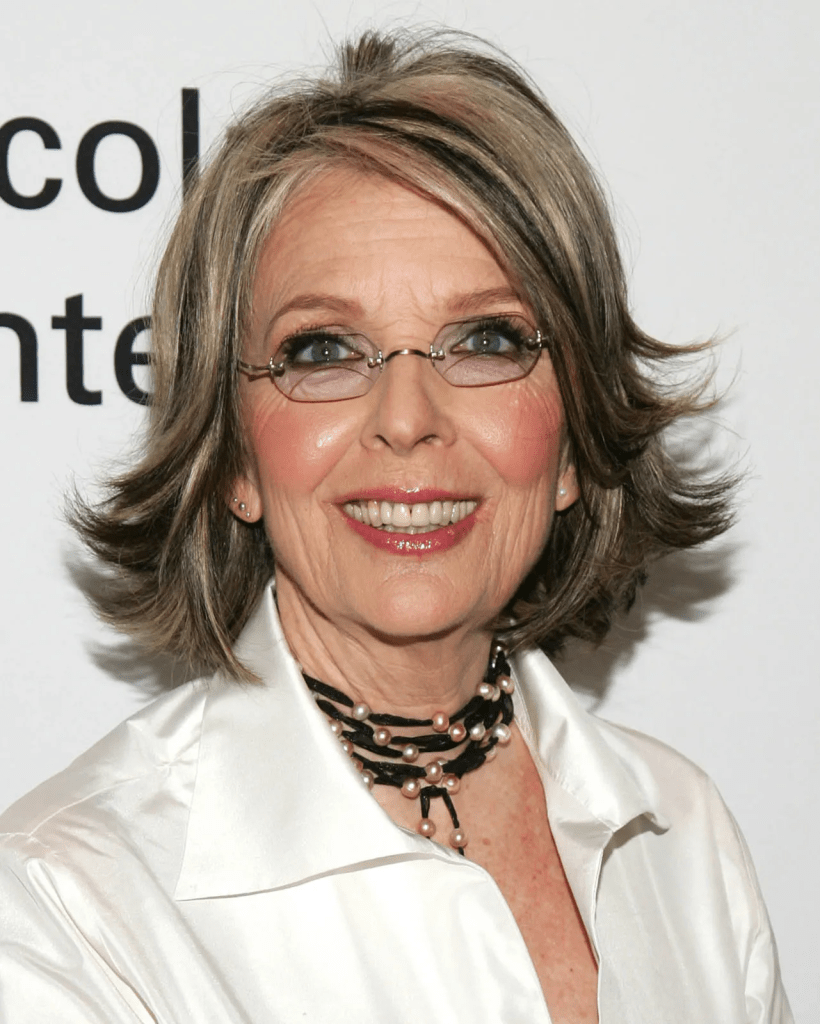
They say most of directing is in the casting. When Francis Ford Coppola cast a young actress named Diane Keaton as Kay Adams in The Godfather, it was perfect. For the most part of her life, Keaton never seemed to fit the idea of what a WASP woman was supposed to be, much the less the WASP wife of an Italian mob boss.
Coppola’s late wife, Eleanor Neil, recalled in 1990 watching in horror as she felt Keaton wasn’t holding their daughter, Sofia Coppola, correctly during the baptism scene of the movie. It’s typical of a mother to be anxious watching someone else handle their child but Neil felt Keaton wasn’t holding young Sofia (who was actually supposed to be an infant boy) properly and would drop her at any second.
Keaton would go on to play many mothers in many roles even though she strayed from the role until she was in her 50s, but some people just happen to come by at the right time. As New Hollywood emerged in the 1970s with the rise of filmmakers like Coppola, Woody Allen, Martin Scorsese and others, Keaton was showing that women didn’t have to just settle for the wives and mother roles after they got to be a certain age. Neil, herself, compared herself to the Kay Adams in the Coppola family. And while Neil’s relationship with her husband lasted over 60 years through ups and downs until her death in 2024, Kay and Michael (Al Pacino) barely lasted a decade.
It may just be one of the hardest but most honest relationships ever portrayed on cinema. This may be in part to the fact that Pacino and Keaton in real life had an on-again/off-again relationship for many years. At the beginning, Michael and Kay are your typical 20-somethings in love holding on to those last few moments of irresponsibility before they have to become adults. After Sonny Corleone (James Caan) is killed and his wife, Apollonia (Simonetta Stefanelli), is murdered in a car bombing intended for him, Michael returns to America cold-hearted. He had been hiding in Sicily after murdering Virgil Sollozzo (Al Lettieri) and his corrupt police captain McClosky (Sterling Hayden). It was revenge for a hit on his father, Vito Corleone (Marlon Brando), that has left him hospitalized for months.
Michael never wanted that way of life and neither did Vito. But when he returns to America, he waits over a year before reconnecting with Kay. As he talks to her, the old Michael is gone and he speaks to her as if he’s arranging a business deal. In the better sequel, we see the divide grow between the couple to the point Kay gets an abortion because she doesn’t want her unborn child to get involved in any criminal activities. This is after a hit is put on the Corleone household and his family is put in a huge risk. It’s also the first time Kay fully realizes that her and her kids lives are in danger leading her to have that abortion when Michael leaves to conduct business with Hyman Roth (Lee Strasberg) in Florida and Cuba.
Keaton does more in this performance than the first one as she speaks more with her eyes, gestures and body movements. You can see from the start that their marriage is strained. I laugh how the senator played by G.D. Spradlin calls her the wrong name just to show how irrelevant Michael views her as it’s the same with his adoptive brother, Tom Hagen (Robert Duvall) who’s been excluded a lot of family business. During the Senate Committee hearings, Kay sits behind Michael like the dutiful wife but it’s clear she doesn’t want to be there. At Vito’s funeral, she’s sits behind him weeping. It’s these little changes that both Keaton and Coppola bring to the role that make her character all the more heart-breaking.
In her final scene of the the second movie, she has left Michael who doesn’t want her around “my kids.” She’s about to leave and she turns around wanting one more hug as she freezes and sees Michael has come home early. They stare at each other. Michael isn’t angry. He’s upset by hiding his emotions because he knows it’s all over. He walks over and closes the door on her echoing the final scene of the first movie. But there is a second or two as Kay stands there in disbelief before she can muster the strength to walk away heartbroken.
During this decade, Keaton would appear in numerous movies by Allen including Sleeper, Interiors, Manhattan and her Oscar-winning role in Annie Hall. Reportedly, Allen had intended the movie to be a murder comedy caper but as he was editing the movie realized it didn’t work. Instead it was a movie about relationships with a non-linear narrative and voice-over as well as one of the funniest sneezes ever.
Keaton would also appear in the controversial Looking for Mr. Goodbar as a schoolteacher who has a very active social and nightlife. The movie was made during the final years of The Sexual Revolution and loosely inspired by the murder of Roseann Quinn, who was stabbed to death by a man she met at a bar. The movie features early performances by Richard Gere, William Atherton and Tom Berenger who would end up being the person Keaton’s character meets only to have him sexually assault her and fatally stab her at the end.
Keaton was 33 when the movie was released. And while she seemed on fire in the 1970s, her roles would dry up in the 1980s following a role as the real life Louise Bryant in Warren Beatty’s Oscar-winning Reds. Her lead roles in Shoot the Moon and Crimes of the Heart received good reviews and accolades but they’re barely made a dent at the box office.
Then, there was Baby Boom. The movie was one of her numerous collaborations with Nancy Meyers and/or Charles Shyer. She played J.C. Wiatt, a Manhattan yuppie who finds herself inheriting a 14-month-old child, Elizabeth, from a long-lost cousin who passed away. While the movie has a sitcom feel, Keaton plays up the comedy. There’s something funny about her using a produce scale to wear Elizabeth as well as feed her pasta thinking she’ll eat it instead of slinging it across the room, which she does.
In retrospect, the movie does seem to treat the idea of business women in an unfair light. J.C. finds herself looked over for a promotion because she has to take care of Elizabeth. While the second half of the movie has J.C. forming her own company that is a success, I felt the inclusion of a love interest in the local veterinarian played by Sam Shepherd too formulaic. As women were still facing discrimination in the workplace, this movie remains on the fringes of what it otherwise would’ve said today.
Not every businesswoman is a “ball-busting bitch.” A lot of women now are putting their lives and careers above marriage and kids. The notion that Keaton made this movie while she was 41 (unmarried with no kids) might have angered some people. But I think it shows just how hard it is for women, even if they’re married, to balance work and their kids. Now, with many actresses like Patricia Clarkson, Heather Graham and Marisa Tomei saying they have see themselves as housewives or suburban mothers, it’s a testament of the changing times.
Keaton would return to play Kay again in The Godfather Part III, even though her performance in the movie is overshadowed by Pacino’s outrageous acting style that he’s been doing a lot since and Sofia’s horrible performance. But still Keaton managed to do more with the way she looks at someone or her delivery of words.
The 1990s would bring on more comedic roles as Nina Banks in Fathers of the Bride and its sequel, The First Wives Club and Manhattan Murder Mystery. She took a shot at directing with the dramedy Unstrung Heroes and later with Hanging Up, which she also starred in.
A new decade and century brought more roles such as a rom-com with Jack Nicholson in Something That’s Got to Give. By this time, she had adopted two children and become a mother herself. She is also credited as a producer on Gus Van Sant’s controversial Elephant, which was loosely inspired by the Columbine High School massacre.
Most of the movie roles faded as a new crop of actresses took over the spotlight. But Keaton seemed to always command a room. She had a certain style about her wearing pantsuits before it was popular and even letting her hair stay grey when it was taboo for women actresses who continue to dye it. You kind of wonder if Annie Hall was just Keaton being herself.
I hate to call people trailblazers but her fashion and demeanor showed everyone that women didn’t have to turn into Betty Homemakers once they get a certain age. Too often feminism gets a dirty name. But still I always thought Keaton would have been a perfect actress to play Gloria Steinem.
What was your favorite role or movie of hers? Please comment.
 Zane Says