In his memoir Making It So Sir Patrick Stewart comments how the late Sir Ian Holm froze up from stage fright during a production of Eugene O’Neill’s The Iceman Cometh. Holm went on to have an impressive career in movies and on TV. Yet, he stayed away from the stage for decades.
Sometimes, even the best actors get nervous. And I’m sure musicians are just as nervous. Britney Spears, Beyonce, Taylor Swift, Bruce Springsteen and so many more have probably walked out on stage seeing thousands of screaming happy fans in attendance and thought, “Holy fuck!”
Yet, on a movie set, it could be less than a dozen people around them so they’re not going to freeze up. But then again, they may not work well with another actor. This is why many movie directors shoot multiple takes from different angles and they leave it up to their film editors to piece it all together. So, the question is posed who is actually getting the best out of a scene? Is it the actors or the directors? Maybe it’s just the editors who notice that Actor A did better on the fourth take while Actor B did their best on the first take.
And let’s not forget the writers who put it altogether. Good writing makes good performances. In college, I did a monologue of Willy Loman from Death of a Salesman. While many actors would want to play Willy or his troublesome son, Biff, who was his favorite, no one wants to play Happy Loman. He lives in the shadow of Biff who had a lot going for him and screwed it up, yet Willy is still supportive more of Biff while Happy is pretty much the throwaway child. He’s basically a doormat always seeking his father’s approval.
In many ways, it’s a more complex role. Without Happy, Biff wouldn’t be hiding his true self for his father’s approval as Willy wants so much for his first-born son to succeed even though Willy himself is not as successful. Yet, someone has to always play Happy. And someone can screw it up if they don’t understand the character or even the entire play.
And before there were motion pictures, a lot of plays could be performed horribly by actors who had stage fright or if they’re was just some rowdy people in the audience messing it all up. Remember Kevin Kline as Willy Loman performing at a dinner theater for elderly people? Hell, look at all that happened at the Ryder Cup tournament. I’m no fan of golf but you have to behave a certain way. I mean, Happy Gilmore was just a movie. And even the fans there were a little more civilized.
Where I’m going with this is that the evolution of AI can easily change entertainment. Studios won’t have to pay huge salaries to actors when they’re hot but still have to honor contracts when they’re not. After the success of the first Rush Hour in 1998, Chris Tucker signed a $45 million contract for two sequels. An while Rush Hour 2 was enjoyable and came out in timely fashion in 2001, no one really cared for Rush Hour 3 by 2007. I mean, Tucker himself hadn’t made a single movie in the interim.
This allowed for the rise of other black actors who could do both comedy and action. We even saw the rise of Dave Chappelle on the Chappelle Show and its collapse in between Rush Hour 2 and Rush Hour 3. Kevin Hart, Anthony Anderson and especially Dwayne “The Rock” Johnson all became bigger names. And while Rush Hour 3 made some money, it wasn’t the success the first two movies were. Many actors, even character actors, only have four or five years in which they seem to be cast in almost everything before their popularity wanes.
In the 2010s, Johnny Depp was commanding massive salaries of $20-25 million per movie. Even the 2014 movie Transcendence garnered a $20 million paycheck and he filmed most of his scenes away from the rest of the actors as only his head and upper body is seen. Of course the movie bombed because people weren’t really clamoring to see a movie where Depp spends most of his screen time on a fucking screen himself.
Should studios spend the millions they would give to celebrities on the likelihood they’ll remain famous and score them some big bucks when you can use AI actors? And you can do just about anything you want with them. Well, I’m sure they’ll be limits Hollywood and motion pictures have always been about pushing the boundaries.
Speaking of Holm, his likeness was used in Alien: Romulus. So was Peter Cushing’s in Rogue One: A Star Wars Story. And these were after both actors have passed away. Their estates were ok with this but it doesn’t always look great on the screen.
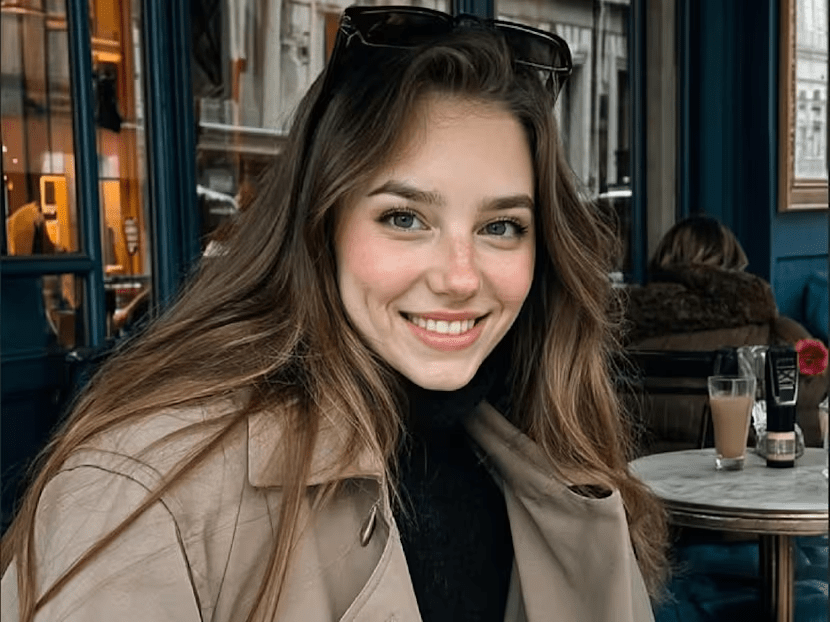
Sadly, sometimes people get cheated. The latest controversy is over Tilly Norwood who is an AI generated actress. And she’s caused quite a rouse from many actors, especially women. I mean, women are generally screwed over by the studios, producers and directors. Now there is an AI generated composite of many actresses which is what former actress Mara Wilson (Mrs. Doubtfire, Matilda) noted. And because they’re using bits and pieces of actresses, they can’t get sued over likeness rights.
But it seemed we were kinda heading this way for some time. In Dead Men Don’t Wear Plaid, Carl Reiner and Steve Martin incorporated many actors (Humphrey Bogart, James Cagney, Bette Davis, etc.) from classic black and white film noir movies in new footage. This is nothing new. Radio deejays have been doing the same thing for years and late-night talk shows will incorporate real footage of politicians with comedic bits. Not Necessarily the News did the same thing in the 1980s using real news footage with comedic bits.
Yet there was always a feeling the viewers knew it was fake. When Billy Crystal did it with the movies nominated on the Oscar telecasts in the 1990s, we laughed. But what we didn’t realize was filmmakers like Robert Zemeckis were already laying the groundwork by using Presidents John F. Kennedy, Lyndon B. Johnson and Richard Nixon along with John Lennon, so it looked like they were interacting with people in Forrest Gump. Zemeckis would later do the same thing with Bill Clinton in Contact.
If you look at Andy Serkis as Gollum in The Lord of the Rings movies, he gives a wonderful performance. But what is Serkis and what is the countless people on computers making it look great. George Lucas had the same issues on The Empire Strikes Back as he felt Frank Oz turned in an Oscar-worthy performance as Yoda. Even Roger Ebert praised Oz’s puppetry and voice work. But to paraphrase Michael O’Donoghue, actors don’t vote for felt.
Even though Linda Blair got an Oscar nomination for Best Supporting Actress for The Exorcist, there was controversy because Eileen Deetz had been used for some scenes under heavy make-up as a body double. Also Mercedes McCambridge had done the voice of the demon possessing her. So, whose performance was being recognized?
Did the Razzies award Klinton Spilsbury the award as Worst Actor for The Legend of the Lone Ranger or should James Keach have received it as he dubbed the voice? Andie MacDowell saw her character’s voice dubbed by Glenn Close in Greystoke: The Legend of Tarzan, Lord of he Apes because of MacDowell’s voice had too much of a Southern accent.
And now we’re dealing with a lot of de-aging in movies and TV which also affect performances. I’m a believer that if more people communicate nonverbally then actors act more nonverbally. Tweaking performances in post-production as always been happening. In Modern Romance, Albert Brooks played a film editor who felt a scene works better without George Kennedy’s overacting while he screams. It does. But Kennedy wants him to keep it in the movie.
So, what works best? The ending of Titanic had Bill Paxton letting out some silly laugh as he say the elderly Rose toss the diamond into the ocean. As a writer myself, sometimes what looks like it’ll work on the page doesn’t always work good on the stage or screen. So, you have to kill your darlings to make it look better. Woody Allen’s Oscar-winning Annie Hall was originally intended as a comic murder mystery before he realized the murder mystery element didn’t work and re-edited it. So, does that mean that Diane Keaton didn’t deserve her Oscar for her role because she played a different character while filming?
Many critics have noted some actors are only nominated for roles because it’s been written so well. Gene Siskel debated this with Ebert over Uma Thurman in Pulp Fiction. I disagree that she bought a little spunk and playfulness to the role that was needed. But with AI actors, you don’t have to spend money on casting agents and take the time during auditions.
And that’s why the SAG-AFTRA is totally against it as they should be. It totally eliminates the need for actors. Or it screws them out of work as they’re only required to work a day where as they would work a week. And since stock photos and headshots are already existing, they can pick and choose from hundreds of actors. Who’s to say they won’t search social media for pictures of people to use. How’s anyone going to know?
The creator of Norwood is defending it. “To those who have expressed anger over the creation of my AI character, Tilly Norwood, she is not a replacement for a human being, but a creative work – a piece of art. Like many forms of art before her, she sparks conversation, and that in itself shows the power of creativity,” Eline Van der Velden wrote in a statement on Instagram, also posted on Norwood’s own Instagram page.
But still, some people may not think it’s art but the next stage. In 1996, a young Ali Larter appeared as a fictional actress Allegra Coleman on a Esquire hoax cover story about celebrity sensationalism. Many people didn’t get the joke and the phone calls went around Hollywood for people looking to sign her or cast her. Even before that, after seeing the Hollywood satire The Player, some real-life studio people thought the fake legal thriller Habeas Corpus (starring Bruce Willis and Julia Roberts) would make a good movie itself and tried to get the filmmakers to sell it.
Consider that three of the fake trailers (Machete, Thanksgiving and Hobo With a Shotgun) used in the movie Grindhouse have gone on to be real movies, truth is stranger than fiction. We’re now living in the world that Andrew Nicol satirized in his little-seen S1m0ne with Al Pacino as a filmmaker who creates a fake women celebrity with computer technology.
What do you think? Please comment.
 Zane Says