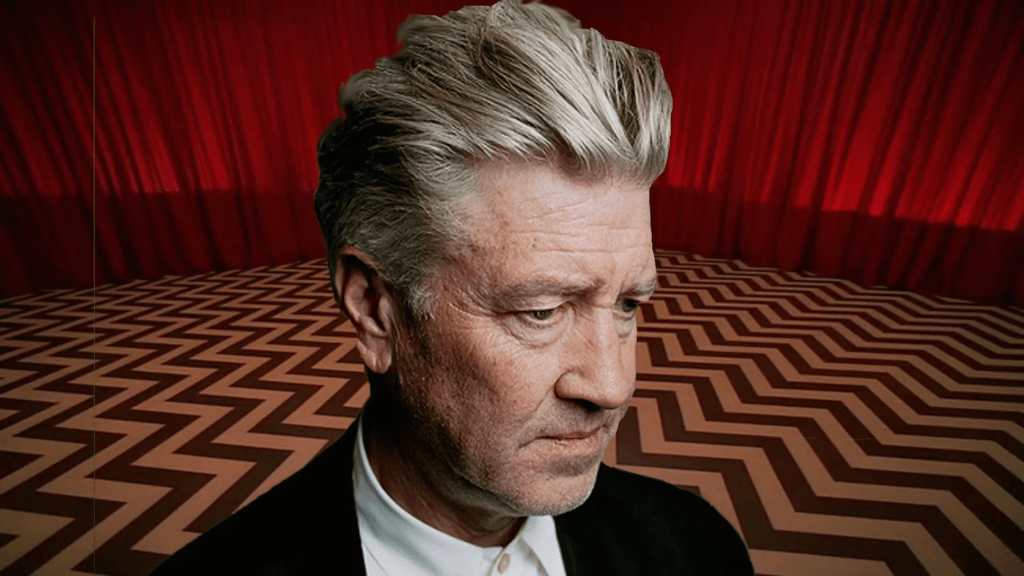
I’ve often said even when David Lynch made a bad movie, it was still a lot better than some other director’s best movies. I remember watching the 2002 Academy Awards telecast and very briefly there was a shot of Lynch standing next to Robert Altman as they were casually talking. It was one of those rare meeting of the minds that you’d probably never thought you’d see.
Altman and Lynch on the surface looked like they couldn’t be any different, but they were both the same when it came to story telling. Take for instance, the 1999 movie The Straight Story. If you ever thought you’d never see opening credits read “Walt Disney Pictures presents A David Lynch Movie,” well now you have. The movie is available on Disney-Plus and I highly recommend you watch it. It’s not distributed by Disney’s more mature banner labels (Touchstone and Hollywood Pictures, both of which are now defunct).
No, this is Walt Disney Pictures and it’s G-rated even though there are a few words here and there as well as images of people drinking beer that might have upset some viewers. But a G-rated movie by David Lynch? Only three years earlier, the ratings board felt Dee Wallace Stone angrily firing a shotgun at a door in The Frighteners constituted an R rating. And The Straight Story is Lynch’s best movie.
For all his critics over the years, Lynch was showing them that truth is stranger than fiction. The movie is based on the true-life experiences of Alvin Straight, an ornery old cuss from Laurens, Iowa who walks with two canes and flat out refuses to ride in a car with anyone. Therefore, when he gets word that his estranged brother in Mount Zion, Wis. had a stroke, he sets up on a lawn mower tractor to travel about 250 miles to visit him.
What might take others a few hours takes him several weeks. Along his travels he meets a lot of regular people with irregular lives. There’s a woman who is constantly hitting deer with her car as she has to travel along an isolated roadway to her work. He offers food and some words of wisdom to a young woman who may be running away from home. He is invited to join he bivouac of some bicyclists who welcome him with open arms and enjoy his company.
In one of the more memorable scenes, he has to have his lawn mower fixed by two bumbling handyman brothers played by John Farley and Kevin Farley (brothers to Chris) who try to get more money out of Alvin. However, he says they spent more time arguing with each other than fixing the lawnmower. In another scene, Alvin offers to buy a grabber reacher off a store proprietor who puts up a fuss about not wanting to give it up at first. The way people talk and interact with each other in this movie feels authentic almost like Lynch offering a documentary look into the lives of people in the Midwest.
Farnsworth was terminally ill with metastatic prostate cancer at the time of his casting and continue to push along out of respect for the real Alvin Straight who had died in 1996. Farnsworth was having to use a walking cane and was surprised to hear that Straight used two. Farnsworth also admired and respected that Straight refused to use profanity or foul language. Farnsworth was known for disliking some of his own movies because of the profanity and vulgarness. The movie would be Farnsworth last film role and earn him a nomination for Best Lead Actor at the Oscars.
The fact Lynch made this family-friendly gem between Lost Highway and Mulholland Drive, two movies that earned their R ratings with scenes of explicit sex and graphic violence just shows what a great filmmaker and storyteller he was. I think some directors work best when they move out of their comfort zones. Even though I don’t think Quentin Tarantino will ever make a movie rated PG or even PG-13 rated, I find his adaptation of Elmore Leonard’s Rum Punch into Jackie Brown to be his best work.
To be honest, I don’t think too highly of Eraserhead. It did open a lot of doors for Lynch but it’s a hard movie to sit through, not because of its weirdness but for the slow tediousness of it. Sometimes, a director needs to hone their craft a little better. It’s been wildly reported that production on the movie took a long time as Lynch couldn’t get funding while a simple of scene of Jack Nance’s Henry Spencer opening a door in a hallway and walking into an apartment had over a year of a lull in filming.
The movie made on only $100,000 ended up grossing over $7 million which is serious money. I’d argue a lot of people who attended it smoked pot, dropped acid and did ‘shrooms before watching the movie. It brought Lynch to the attention of Mel Brooks, who had branched out into movie producing in the 1970s. Lynch was tapped to direct The Elephant Man, a movie based on the life of Joseph Merrick, incorrectly identified as John.
Brooks kept his name off the credits because he didn’t want people thinking it was a comedy and to take it seriously. Brooks went to bat for Lynch striking down a lot of the criticism from movie studio executives saying: “We are involved in a business venture. We screened the film for you, to bring you up to date as to the status of that venture. Do not misconstrue this as our soliciting the input of raging primitives.” A few touch-ups were made but the final cut was released as Lynch had intended.
The movie ended up grossing over $26 million in North America on a meager $5 million budget. It would be nominated for eight Academy Awards with Lynch getting a Best Director nomination. However, it didn’t win any awards. The make-up department wasn’t recognized either. Criticism of the Academy’s refusal to acknowledge their work led to the creation of the Best Make-up Award the following year. The make-up process was so much of a toll on John Hurt as Merrick they adjusted the shooting schedule to wear he’d be off every other day.
I agree with some critics the movie seems to portray Merrick as a courageous man just because he existed. In actuality, Merrick actually agreed to join a freak show as it earned him some money. Despite some criticism, it brought Lynch into the mainstream. He was originally considered to direct Revenge of the Jedi as it would later be called Return of the Jedi. But he decided to go work for producer Dino De Laurentiis on the movie adaptation of Frank Herbert’s Dune.
However. the movie divided critics and audiences as well as fans of the novel. Dune was a box-office bomb and some critics called it the worst movie of the year 1984. In some ways, the gruesome nature of the novel mainly with the Harkonnens upset some people as well as deformed look of the Guild Navigators probably turned off audiences more akin to the Halloween-style commercial look of alien creatures in the Star Wars movies.
Regardless, I look at Dune as a wonderful disaster on every level. Having seen both the theatrical version as well as the longer TV version that is credited to “Alan Smithee,” it’s harder to see what exactly Lynch was trying to do. For critics and film scholars who fawn all over the works of Terrence Malick for their dream-like sequences, one has to wonder what did they expect when they saw Lynch as a director of the movie. If you hire David Lynch to direct a movie, you’re going to get a David Lynch movie.
The failure of Dune led to Lynch to make Blue Velvet, a sordid neo-noir mystery of the seedy underbelly that exists in small-town America. Lynch worked again with De Laurentiis who gave him complete artistic control and he cast Kyle MacLachlan again as the protagonist. The actor had appeared as Paul Arteidis in Dune. The movie polarized critics with some calling it one of the best while others called it one of the worst of the year 1986.
Filming the movie in the Wilmington, N.C. area caused controversy as people had turned out to watch a night shoot as Isabella Rosselini’s character has to appear nude, bloodied and bruised. The scene angered local officials. Despite all the problems, Lynch earned his second Oscar nomination for Best Director.
The year 1990 would bring Lynch quite possibly his most success. That year, his movie Wild at Heart was released. Based on the novel of the same name by Barry Gifford, the movie had allusions to The Wizard of Oz and Elvis Presley with Nicolas Cage and Laura Dern as a young couple who go on the run. It mixed graphic violence with explicit sexual scenes with a dark comedic humor that once again divided critics and audiences.
Months ahead of its August 1990 release in American theaters, it won the Palme d’Or at the Cannes Film Festival in May that year. It would be controversial at the time. Could it have been influenced by the instant success of Twin Peaks which premiered on April 8, 1990? Lynch created the series with Mark Frost and directed the two-hour pilot episode.
On the surface, Twin Peaks looked like a quirky series about eccentric weird people in a Pacific Northwestern town. The series blended comedy, drama, the supernatural and police procedurals into a subtle tongue-in-cheek parody of night-time soap operas. It’s like Peyton Place with a hilarious sense-awareness of its own foolishness.
Despite some criticism for its weirdness, it actually portrayed a more honest representation of Americans of the era. In the pilot episode, MacLachlan plays FBI Special Agent Dale Cooper who talks into his tape recorder to “Diane.” He’s a man who loves his coffee and a nice pastry to go with it. What makes him different than Kojak with the lollipops.
When he asks Sheriff Harry S. Truman (Michael Ontkean) about what type of trees do they have around, it seems like an out of context line until you stop and think why can’t a federal agent ask someone a question not pertinent to the case? Tarantino would write scenes for movies Reservoir Dogs and Pulp Fiction where criminals and killers talk about songs “Like a Virgin” and “The Night the Lights Went Out in Georgia” and how different fast food restaurants are in Europe. Lynch and Frost predated him by a few years.
Twin Peaks focused on the details of people on a show that have been discarded for years. It might seem odd that a young deputy like Andy Brennan (Harry Goaz) would begin crying as he sees the body of Laura Palmer (Sheryl Lee) wrapped in a tarp. But if a community like Twin Peaks doesn’t have many murders, it’s likely a young, naive officer would get emotional.
The pilot episode shows how great a director Lynch is even when it comes to TV. During one of the best scenes, Laura’s father, Leland (Ray Wise) gets a call from his wife, Sarah (Grace Zabriskie), who is worried where their daughter is. In the background, you can see Truman pull up and walk in to the hotel lodge where Leland is conducting a business meeting. Truman asks the clerk where Leland is and when he sees the sheriff coming toward him, you can hear Sarah’s voice break into crying on the receiver off-screen as it all clicks. Add to that Angelo Badalamenti’s beautiful music score as these two parents get the worst news they ever want to hear, it’s terrific.
But the brass at ABC wanted Lynch and Frost to solve the mystery of who killed Laura. However, they never really intended for the murder to be definitely solved but it would act for a way in which an outsider in Cooper would see the strange world of the community. Yet, once they did solve the murder halfway through the second season, the revelation was it was Leland possessed by the malicious spirit of Killer Bob (Frank Silva).
The problem now was the show didn’t really have a reason to keep viewers tuning in. And it gave other TV show creators and producers a blueprint of what NOT to do. Ergo, shows like Northern Exposure and Picket Fences were able to piggy-back on the success of Twin Peaks and keep the momentum going without revolving around one concept that audiences would want to be resolved. Even The Fugitive was able to drag Dr. Richard Kimble seeking the one-armed man for four seasons.
Sadly, Lynch hit a rough patch in the early to mid-1990s. Twin Peaks: Fire Walk With Me, a prequel to the series focusing much more on the life of Laura before her murder, premiered in theaters during the summer of 1992. It bombed at the box-office and critics were mixed. That same summer, Lynch and Frost attempted to do a surreal sitcom On the Air, which only aired three of the seven episodes filmed.
Lynch spent most of the 1990s directing commercials and made Lost Highway starring Bill Pullman, Patricia Arquette and Balthazar Getty. The movie’s campaign heavily marketed that Siskel and Ebert had given it “Two Thumbs Down.” Not one of his best attempts, but the story seemed to be a reflection of the L.A. scene where O.J. Simpson was on trial for murder of his wife, Nicole Brown.
It’s a different movie altogether but it has some great moments such as Robert Loggia’s mob boss going ballistic during a road rage scene on some yuppie riding his tail. And it’s the last movie appearance by Richard Pryor, whose multiple sclerosis is on full display as it has affected his speech. Pryor appears in two scenes as a car repair garage manager. I’ve noted how much of the main cast has a connection directly or indirectly to Hollywood celebrity strange deaths and murders.
Around the same time he was getting rave reviews for The Straight Story, Lynch attempted to return to TV with a show called Mulholland Drive. It would focus on an aspiring actress played by a then unknown Naomi Watts helping a woman played by Laura Harring discover her identity after suffering amnesia. The pilot show contains an early role by Justin Theroux as an aspiring movie director.
However, the pilot was rejected by network executives, one of which watched the show early one morning in his kitchen while he was trying to get ready and handle some phone calls. Much to his surprise, Lynch discovered the sets had been dismantled or destroyed which hardly ever happens when pilots are rejected so they can still be shopped around. He then decided to flip the pilot on its side and turn it into a feature movie with help from Le Studio Canal+ in financing.
The movie would go on to be hailed as one of the best movies of 2001. And even Lynch’s major critics, such as Ebert, praised it. Lynch would once again earn a nomination for Best Director at the Oscars. The movie also helped Watts get bigger roles.
His last feature movie would be Inland Empire released in 2006. At three hours, it’s his longest movie with a run time of three hours. This is the only movie I haven’t been able to sit through all the way, even though it’s streaming on HBO Max and I have vowed to watch it again from beginning to end.
Sadly, Lynch and other directors such as John Waters who were working on the fringe of Hollywood’s system found themselves unable to get any financial backing for new movies. As the 2000s ended, studio executives only wanted to make blockbusters and big budget movies that continued in the 2010s as three-dimension technology became advanced.
He was able to return to the Twin Peaks universe to kind of complete what was left with the series as it was canceled. Ending on a cliffhanger, the original series has Cooper being possessed. The Return picks up 25 years later which was when Cooper would have dreams of seeing Laura older along with The Man From Another Place (Michael J. Anderson) who doesn’t appear in The Return. I’m hoping to revisit this series again because I have a few theories about what might have happened.
Lynch turned to acting more. He had been in small roles in The Elephant Man, Dune and Inland Empire as well as a deleted scene in Lost Highway. He got a recurring role as Gus the Bartender on The Cleveland Show, a spin-off of Family Guy. Up until this show, his famous acting role was as FBI Deputy Director Gordon Cole on Twin Peaks. He would revive this role for The Return. Throughout the the 2000s and 2010s, he continued to direct commercials, music videos and short films.
His last acting role is probably more memorable as he plays veteran legendary director John Ford in The Fabelmans who advises a young aspiring filmmaker loosely based on Steven Spielberg. The movie was a semi-autobiographical movie about Spielberg’s upbringing. Lynch appears toward the end of the movie where the protagonist Sammy Fabelman (Gabriel LaBelle) gets a chance encounter with Ford.
The scene is wonderfully filmed and acted as Lynch plays Ford as a cranky man staggering into his office oblivious to the young man waiting for him. He lights up a cigar, takes a few puffs and then acknowledges Sammy and then grills him on some paintings in his room and what does he see. Ford tells Sammy that when the “goddamn horizon” is at the top and bottom of the screen it’s interesting. But when it’s in the middle, it’s “boring as shit.”
Then, he wishes the young man good luck before telling him to “get the fuck out of my office!” As Sammy walks out and turns to thank Ford, Lynch cracks a smile and says, “My pleasure.” As one YouTube commenter put it, “A great director directing a great director playing a great director.”
And as the last time we’d see Lynch on screen, it’s a fitting curtain call.
I could talk more about Lynch, but this post is already long as it is. I think American cinema and especially TV in the last 30-35 years would be a lot different if he wasn’t around. People could call his work surreal but sometimes life is like that. Not everything follows a complete narrative with a definite conclusion.
What is your favorite movie or TV show of his? Please comment.
 Zane Says