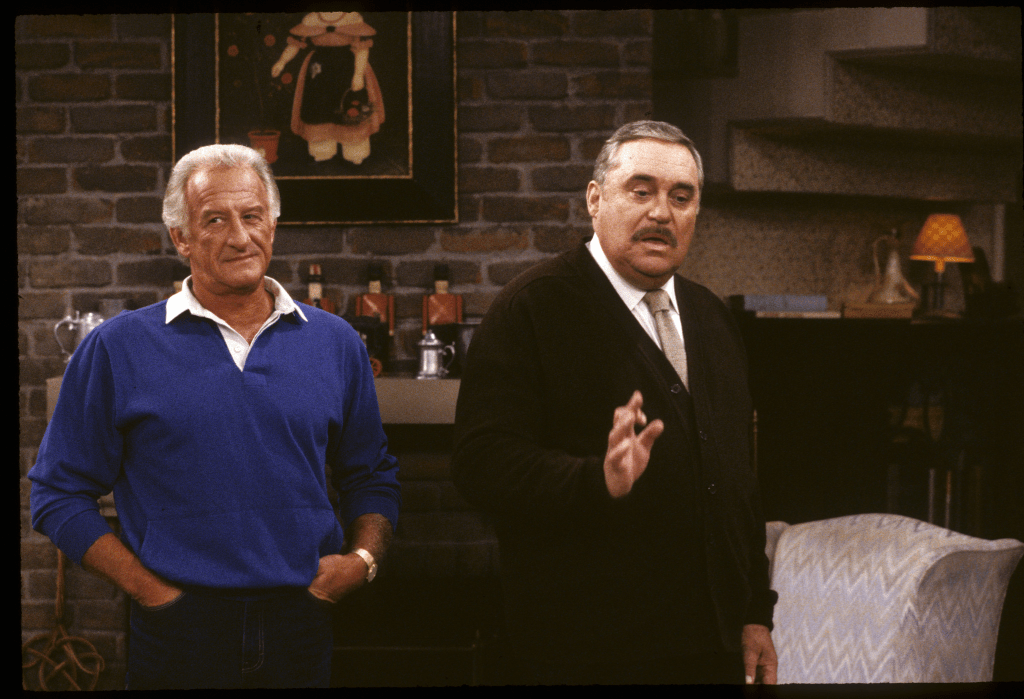
If Major League Baseball had a Rodney Dangerfield, it was Bob Uecker. Despite his self-depreciating humor, he was actually was on the St. Louis Cardinals team when they won the World Series in 1964.
But many people born in the past 50 years probably only remember him as a fictional version of himself in the Miller Lite commercials from the 1980s, or as blue-collar Pittsburgh resident George Owens in the sitcom Mr. Belvedere or probably his most iconic role as Harry Doyle, announcer for the Cleveland Indians in Major League.
Actually, there wasn’t much of a difference between Harry Doyle and Uecker himself. He started with the Milwaukee Braves in 1956 and after retiring returned to Milwaukee to do radio broadcasts for the Brewers in 1971. His wit and humor became a staple of her persona that he found himself appearing on late-night talk shows. Johnny Carson, himself, dubbed him “Mr. Baseball.”
And for the 1970s and 1980s, he often appeared on several shows leading to a starring role in Mr. Belvedere. The ABC sitcom for six seasons from 1985 to 1990. It was a loose adaptation of the 1947 Belvedere by Gwen Leys Davenport. It focused on Lynn Belvedere (Christopher Hewett), a prominent English butler who’s worked for many famous people and dignitaries finding himself working for the Owens family, which in the 1980s was your typical sitcom family.
Originally, Belvedere’s ways of doing things began to conflict with George’s no-nonsense style of family life. But over time, the two men from different backgrounds and cultures really warmed up to each other and even had platonic love feelings. George would often call Belvedere “Big Guy” as a sign of friendly affection. The show was never really a big ratings hit as it ran on Friday nights before the TGIF era.
Sadly, when other shows like Full House, Step by Step and Family Matters became more popular on Friday nights, ABC moved the show to Saturday nights where it pretty much sank in the ratings. Possibly sensing the end was near, the show runners set up an arc where Belvedere finds love and gets married leaving the Owens by moving to Africa to help his wife on her research and work. It was George who manages to convince Belvedere to go along with the wedding after he gets cold feet. (Ironically, Hewett himself would remain a bachelor his whole life.)
By the time of the show’s cancelation, Major League had been rising in popularity. Uecker’s Harry Doyle was often seen in the announcer’s box except for another scene where he is seen in a radio studio booth. It’s likely this was done so all his scenes could be filmed all at once away from the rest of the cast that includes Charlie Sheen, Tom Berenger, Corbin Bernsen, Rene Russo, David Haysbert, Wesley Snipes and Chelcie Ross.
In many ways, Uecker probably would’ve found some humor in the fact he wasn’t ever seen with the other major cast members. Despite Mr. Belvedere’s medium status in the ratings, Major League would become a big hit grossing over $75 million worldwide against a $11 million budget. About $50 million was grossed in North America alone. Many people have looked to the movie as a way of reviving popularity with the Cleveland Indians (or Guardians as they’re known now.)
In 1995, Cleveland competed against the Atlanta Braves (another team Uecker played for) in the World Series. The Braves won. However, in 2016, when the Chicago Cubs faced off against Cleveland in the World Series, a viral campaign started to get Uecker to announce for Cleveland. It was to no avail. I think Uecker couldn’t turn his back on his Brewers like that.
In many ways, I think he felt more at home in Milwaukee, the city where he was born and raised, that a true baseball fan never turns their back on the home team. Uecker may not have hit many home runs or hit huge goals. His batting average was only .200 and he only hit 14 home runs and 74 RBIs.
However, he was more important to the sport off the field than on. They say that it takes multiple people to supply and assist one infantry personnel in the military. Well, baseball will never be the same without Uecker. Milwaukee fans (and many other fans) spent decades listen to Uecker through the ups and downs.
To have a hit movie, a TV show and popular commercials all at the same time, Uecker hit the Grand Slam. Rest in peace, Mr. Baseball!
 Zane Says