There’s a story that when they were putting together the segments of what would become Amazon Women on the Moon, producer Robert K. Weiss tried in vain to release the movie under the title “The Greatest Movie Ever.” The gag, he said was they could use the title in any reviews by famous credits to use in commercials and advertising.
But this didn’t work. For obvious reasons, the movie could have been shunned by all top critics when it was released. Needless to say, the movie, which consisted of comedy segments featuring “Lots of Actors,” was still poorly received by critics and audiences after reportedly sitting on the shelf for two years before being released in September of 1987. Yet it was a bold and telling move on the power of movie reviews and whether or not we should really take stock in what they say.
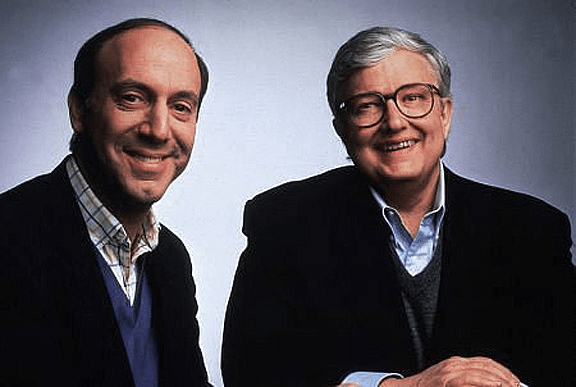
At the time of the movie’s release, Siskel and Ebert were the two best known movie critics. Gene Siskel, of the Chicago Tribune, and Roger Ebert, of the Chicago Sun-Times, were known for their signature “Two Thumbs Up” critique of a movie. The popularity of their show which changed names and formats over time made them celebrities but it also brought them a lot of infamy.
Reportedly, the two-head dragon creature in 1988 Willow is named Sisbert, a criticism of the two as both director Ron Howard and producer George Lucas were angry at some of their previous reviews. Needless to say, the villainous General Kael is named after Pauline Kael who wrote for the New Yorker from 1951 to 1991. Siskel would go on to be criticized in the 1994 movie The Ref where J.K. Simmons plays a military school commander named Siskel involved in a blackmail scam of sex pictures of an affair he was having. Apparently writer Richard LaGravenese didn’t care for Siskel and Ebert’s dismissal of his 1991 Oscar winner The Fisher King.
Well, if you’re going to have a fine actor like Oscar winner Simmons portray a parody of you, I feel while LaGravenese won the battle but lost the war. Even in death, Siskel the critic is probably laughing he was parodied by such a well-respected actor. Years later, both critics would find themselves parodied in the 1998 Godzilla where Michael Lerner plays an inept mayor of New York City named Ebert who has an assistant name Gene who at one times criticizes him for eating too much sweets. Ebert would later comment that he was offended Mayor Ebert wasn’t squashed by the huge lizard beast.
Apparently, Siskel and Ebert gave “Two thumbs down” to Independence Day. The filmmaking team of Roland Emmerich and Dean Devlin were behind ID4 and the atrociously bad Godzilla. At least X-Files creator Chris Carter was more frank with his criticism of ID4 by having Fox Mulder (David Duchovny) urinated on ID4 movie posters in the 1998 X-Files movie.
Recently, it was reported that public relations firms were allegedly paying about $50 a pop for critics to give favorable reviews to a 2018 movie, Ophelia, which featured Daisey Ridley as the character from Hamlet. This help the movie get a “fresh” review on the aggregate website RottenTomatoes.com following reports of mixed reviews at film festivals before it was released in theaters. But are these accusations true? Is $50 enough to ruin your reputation as a movie critic? And what movie critics are they even using on the format?
Let’s be brutally honest here. Who hasn’t watched a movie that got a lot of “fresh” reviews like in the 80s of 90s on RottenTomatoes and thought, “What the fuck is this?!” I watched Hereditary and couldn’t believe anyone made it past the first hour. As for Midsommar, Ari Aster’s follow-up, I stopped watching about an hour and a half in when I realized it was basically going to same way The Wicker Man went. Both movies have an 90 percent and 83 percent aggregate score right now, but audiences reviews aren’t as favorable.
And even still, regular Joes and Janes may not be so reliable. I’ve gone to the user comments on http://www.imdb.com only to find out that some of the comments feel canned. Depending on what movie it is, they’ll list the good reviews or bad reviews first. And I don’t know how many people actually start a review by saying, “I started an account just to critique this movie” but it seems like a lot. With all the number of e-mails people can make, it’s possible they’re writing multiple reviews.
Aside from movies, TripAdvisor and Yelp, along with Google, are other locations where you can search to find your opinions on things. But mostly, we gravitate toward the bad reviews. I’ll be honest, if I’m going to eat somewhere new or stay at a hotel/resort, I want to know about past experience. Bad reviews get more attention than good review.
And that’s why some production companies and studios are worried. If a movie is highly anticipated but critics aren’t too impressed, audiences can stay away. So they need those good reviews to help put people in theater seats. Yet, still no one is really going to get food posioning or bed bugs from an Adam Sandler movie. You can tell from a trailer what you’re gong to be getting into.
Bruce Willis once said movies that are “dogged” by the critics often make big bucks. He should know. Look at Armageddon. And no one at the start of 1994 was expecting Ace Ventura: Pet Detective to be a hit movie. Critics hated it. But its core audience of teenagers and young people loved it. Tyler Perry movies don’t get good reviews but they make a lot of money from a certain audience.
Different strokes for different folks.
And sometimes, critics despising a movie can actually work. When Lost Highway was released in 1997, the marketing proudly boasted that Siskel and Ebert gave it “Two Thumbs Down.” Fight Club got many negative reviews on its release. Now, almost 25 years later, it’s regarded as a much better movie. The same happened to Idiocracy which got dismissed by many major critics, such as Entertainment Weekly, but now is regarded as a hard-biting satire. Even It’s a Wonderful Life, which is now considered a great classic, got lukewarm reviews when it was released in 1946. Horror movies like Halloween, Friday the 13th and A Nightmare on Elm Street, were all not liked on their releases, however Ebert and The Village Voice both praised Halloween, which helped it. Now, they’re considered horror classics.
I’ve often chose a movie based on one concept – Do I want to see it again? When I used to go to the movie theaters a lot in my younger days, I used to think – Would I pay to see this again? If I said yes, I liked it. Depending on how eager I am to watch it again, depends on how well I like it.
Siskel and Ebert got it right and they got it wrong sometimes. Ebert, who also co-wrote the not-so-good Beyond the Valley of the Dolls, often said he would judge movies based on what the filmmakers intended to do. He often would give favorable reviews to movies that were heavily criticized like Stephen King’s Silver Bullet and most notoriously, Cop and a Half. But Billy Bob Thornton, in an intervew in 1992, credited the two will helping his career following the release of One False Move. It is a good movie and was originally meant to be released direct-to-video before enough movie was raised and allotted to get it in the right movie theaters.
Now, there is obviously something wrong with Rotten Tomatoes. I remember at one time Paddington 2 (which is a great movie) had a 100 percent aggregate score. That was before they found a review that was negative, dropping it down to 99 percent. Now, how credible is the reviewer and did the reviewer write the critique before or after the 100 percent aggregate score?
I’ve looked at some of the reviews on the website and thought, “Who the hell are these people?” I’ve never heard of these critics and even when I try to click on the “Full Review” link, there’s nothing there. With the merger of bloggers (myself included) and podcasts, should someone who posts online have the same weight and clout as someone who reviews for the New Yorker, Variety, Village Voice, New York Times, etc. Were do we draw the line between people who have given a lot of thought and concern over a review and someone with just a grudge.
We live in a world where review- bombing can affect a business. We’ve seen with movies like Barbie, here recently, or the console game Starfield is getting nasty reviews from people who just have a bias and a grudge. People used to spread word of mouth but even that was taken with a grain of salt. Someone’s bad experience at a restaurant may be because like Mr. Pink they didn’t get their coffee refilled six times. Or people expect a roadside motel to be a five-star hotel and don’t like the running eggs at the continental breakfast.
Reportedly RottonTomatoes quietly took Ophelia down. Sometimes a movie that gets bad reviews is enjoyable. People should make their own choices and chose that they like. At least with streaming services and cable if people still have that, you can always just stop watching a movie if you don’t like it. It’s better than losing money on something you saw in the theater or rented.
No matter how hard some try, it’s impossible to make everyone happy all the time. Maybe trying to pay off reviewers, if the accusations are true, maybe people try to make better movies.
What do you think? Pleast comment.

