William Friedkin wasn’t always the most ethical filmmaker. For his Oscar-winning The French Connection, he didn’t have official traffic control and an unscripted collision with a stunt car occured. On the set of The Exorcist, he slapped Fr. William O’Malley, who played Fr. Joseph Dyer to make him look shaken as he delivers the last rites in the climax. Ellen Burstyn has been living with back pain for over 50 years because he told the special effects people to tug her harder so the cable she was attached to was allow her to fall down more effectively. And supposedly a huge argument erupted with actor Jason Miller who played Fr. Damian Karras when Friedkin walked up behind him and fired off a gun (with blanks) to get him rattled.
Friedkin, who was part of the New Hollywood collection of filmmakers who arose during the late 1960s and reigned during the 1970s, passed away on Aug. 7. His movies pushed the limits of how far a filmmaker will and should be allowed to go on the movie set. Unfortunately, when New Hollywood crumpled in the 1980s, Friedkin was one of the casualties. Cruising, released in 1980, was controversial for its subject matter involving gay men and the nightclub scene as a murderer is targeting them. It bombed at the box office. Then, there was the comedy Deal of the Century where Chevy Chase plays an arms dealer. The only memorable scene is when Gregory Hines uses a flame thrower on a car when a fender bender escalates.
His 1987 movie Rampage was a victim of the bankruptcy of the De Laurentiis Entertainment Group and The Guardian was probably one of the lowest moments in his career because it was heavily re-written. The 1990s were a harsher time as his sports drama Blue Chips and his erotic thriller Jade were both box office bombs. Probably the two things to remember about Blue Chips is it’s Shaquille O’Neal’s first film role and Nick Nolte plays a Bobby Knight-inspired college basketball coach who angrily punts a basketball during a game.
In the early 2000s, he teamed with Tommy Lee Jones twice, first on the legal war drama Rules of Engagement which can come off as a little offensive to Arabic people. And thern, there was The Hunted, which seemed like a modern version of First Blood. But then there was the psychological thriller, Bug, that showed us just what Michael Shannon was capable of and a reminder that Ashley Judd could’ve been a great actress before Harvey Weinstein torpedoed her career.
In the 2010s, he only made one movie, Killer Joe, but it’s a crazy movie. Just as he had worked with writer Tracy Letts on Bug, they reteamed for a movie that proved that Matthew McConaughey can be a menacing figure. And then there’s that fellatio scene involving Gina Gershon where McConaughey’s character makes her go down on a fried chicken leg that’s followed by a very violent scene where Emile Hirsch’s character is beaten and shot lying dying as the movie abruptly ends with the characters’ fate undetermined as Clarence Carter’s “Strokin'” begins over the end credits.
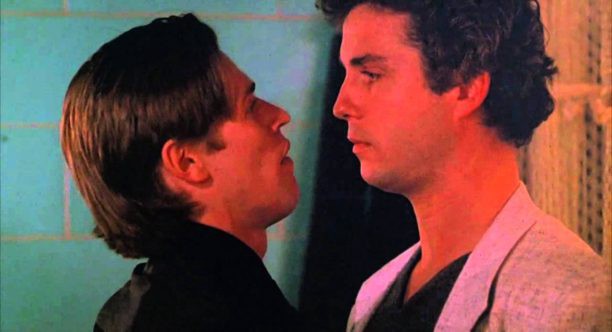
Who else but Friedkin could pull over a crazy ending to a messed up movie and have critics raving at it. It was his first major critical hit in years, since his 1985 neo-noir action thriller To Live and Die in L.A. The movie was released in the Fall of 1985 and included a bunch of rising actors such as William Peterson, Willem Dafoe, John Turturro, Janes Leeves and even Gary Cole, as it’s his first movie role. It’s also notable for being the last movie Robert Downey Sr. was just credited as Robert Downey as his son, Robert Downey Jr. hadn’t really come on to the entertainment scene that well at the time. It was also the first major movie role for John Pankow, who would go on to be more famous for his work on Mad About You and Episodes.
The plot involves Secret Service Agent Richard Chance (Peterson) who is chasing after a reputed counterfeiter Rick Masters (Dafoe). Masters and his henchmen, Jack (Jack Hoar), gun down Chance’s friend and partner, Jimmy Hart (Michael Greene), when he was following up on a tip of one of Masters’ counterfeiting operations alone. Hart was gunned down days before he was set to officially retire and the Secret Service agents including Chance and John Vukovich (Pankow) finally come to the warehouse, located out in the southern California desert wilderness north of L.A. on Christmas Eve.
Chance is determined to get Masters but isn’t too keen on working with Vukovich, which his supervisor, Thomas Bateman (Downey), has arranged. Despite this being set in the 1980s, Chance and Vukovich aren’t your buddy-cop type of partners and even though the killing of Hart days before his retirement seems a cliched trope, Greene’s performance and Friedkin’s direction keep it from being so. Chance is a hardened agent who uses a parolee, Ruth Lanier (Darlene Fluegel), as a confidential informant and sexual-extortion. Vukovich is more of the stricter by the book agents.
They nab one of Masters’ associates, Carl Cody (Turturro), when he passes phony bills at an airport but an attempt on Cody’s life at prison leads to more risks as it becomes more deadly as Masters is burning all he can so it’s not in circulation and the authorities can tie it to him. This is a movie about the low-lifes and criminals of southern California and the strange worlds they live in. Even though he’s known as a counterfeiter, Masters lives in an affluent house and drives a nice, expensive car. But his high-priced lawyer, Bob Grimes (Dean Stockwell), is growing tired of him and willing to point the Secret Service in a direction to get him.
Where does loyalty lie and what’s the price? When Chance and Vukovich go undercover as Palm Spring doctors to do business with Masters, he will do what they need but he wants $30,000 of real money. There’s a hint that Masters knows they’re fakes but can’t really place if they’re law enforcement or just small-time crooks. He notes that even though they’re from Palm Springs, they don’t have tans like they should.
Unfortunately, Bateman isn’t going to approve the money needed to make the arrest so Ruth points them to a Chinese businessman bringing in $50,000 to Union Station to purchase diamonds. This leads to one of the most thrilling sequences of the movie where Chance is able to convince Vukovich on arresting the businessman and taking his money to use. But the businessman has a surprise that leads to a high-speed chase through L.A. and on to the freeway where they are driving the wrong way.
Like The French Connection, the scene is filmed in such a way that’s different than the normal run of the mill car chases. Reportedly, Peterson was actually driving for many scenes in the stunt car with Pankow in the back. At one point, Pankow started to have a panic attack which was left in the final cut. He later said law enforcement would compliment him on his “acting” because they have felt that same way during high-speed chases.
In many ways, it’s antithesis of the 1980s action thriller made famous by the likes of Sylvester Stallone, Arnold Schwarzenegger and Eddie Murphy. Chance isn’t a very moral man, despite having a moment of weakness when he is transporting Cody that backfires. But it’s not Hart’s murder that makes Chance’s immoral, it just elevates the extremes he’s willing to go. He’s already using Ruth for sex. There’s an early scene of him bungee-jumping to show that he’s a thrill seeker. When a stakeout goes wrong when Vukovich falls asleep, Chance is quick to grab some crucial items when the uniformed police officers aren’t looking.
At the same time, Vukovich determines whether he should report Chance to the supervisors to save his own ass or believe the son of a bitch’s plan might work. If they nab Masters, it can help both of them. It’s not just arresting a counterfeiter but a murderer of a federal agent. And there’s a hint that Vukovich realizes that if push comes to shove, the government will smooth things over just in case.
It’s a morality play that Friedkin gives us. Masters is such a lowlife and Dafoe plays him so well, who cares if Chance bends a few laws to bring him to justice? Masters will kill anyone who gets in his way. The world will be a better place without him. But will Chance and Vukovich go too far? It’s never really indicated what Ruth is on parole for and she works as a cashier at a strip club, so she’s not exactly Betty Homemaker.
To produce the movie, Friedkin didn’t really have much of a budget at $6 million, which is less than three times that amount in today’s dollar. This is why actors like Petersen, Dafoe and Pankow were hired. Both Petersen and Pankow had worked previously together on the stage and it was how Pankow got the role. Petersen had to shoot the movie quickly and on location. He would often only use one take and as Petersen reported in the documentary Friedkin Uncut, he would film actors rehearsing their lines unbeknownst to them. Reportedly during a scene, you can see a camera reflected in a car mirror that Friedkin was nonchalant about saying that people basically know they’re watching a movie, even if they notice.
Friedkin wrote the screenplay with Gerald Petievich, who also wrote the novel by the same name. Petievich was a secret Service agent from 1970 to 1985 and can be seen in several scenes playing a fictionalized version of himself. The movie would face scrutiny for its ending which the studio MGM/UA and production companies requested Friedkin change for a more upbeat ending. SPOILER ALERT!!! In the final showdown between Chance and Masters, Chance is shot in the head with a shotgun by Jack and dies. Incidentally, Friedkin thought of this on the day he began filming and just ran it by the actors.
The studio didn’t like this ending and wanted the alternative ending where Jack shoots Chance in the abdomen and live. Some time later, Chance and Vukovich are more or less banished to the Alaskan tundra while Bateman and other agents take credit for taking down Masters. Friedkin called the ending terrible. And Petersen criticized that how could someone take a point-blank shotgun blast and survive. It’s a cop-out, pardon the pun. Chance is a risk taker and he takes the ultimate risk and loses. Considering how the way he treats Ruth and other incidents, it’s almost karma, he ends up this way.
The ending can be seen here: https://www.youtube.com/watch?v=x6B7UiTcRvM
Friedkin is able to make a movie that emulates the vibe of the mid-1980s in southern California. Wang Chung, which had risen as a New Wave band in the early 1980s, does the music for the movie as well as some songs. While some people might laugh at this, it adds a little to the style. This is an neo-noir for the MTV generation that includes graphic violence and sex/nudity. You need something that sizzles like the scenes of L.A. haze.
The look and style of the movie has led to allegations that Michael Mann sued Friedkin for plagiarism over Miami Vice, which Mann was producing. But this has been heavily disputed over the years. But both Friedkin and Mann later said this wasn’t true. And Mann even contacted Friedkin for advice on casting Petersen when he was prepping the 1986 movie Manhunter. Comparing To Live and Die in L.A. to Vice is like comparing Stephen King to Dean Koontz. Yes, they make write about similar things, but they are totally different.
The sexy cool coastal feel of southern California is a direct contrast from the wintry setting of dreary, crime-ridden New York City in The French Connection. People drive expensive cars, live flambouyant lives and even have sex-friendly lives before the outbreak of AIDS went mainstream. It’s hinted that Masters’ girlfriend, a dancer/performance artist Biance Torres (Debra Feuer) is having a sexual relationship with her friend and fellow performer, Serena (Leeves). And even Masters might be bisexual/pansexual as he gets too close to Chance. I remember a line that Roderick Thorp wrote in his crime procedural book Rainbow Drive where he described the city as a place where people thought they could “fuck on the front lawns.”
The movie would be well reviewed but only gross $17.3 million at the box office. However, it would garner more attention in later years as Petersen was cast on the TV show CSI: Crime Scene Investigation as well as Leeves’ role on Frasier. And as Dafoe’s career took off following his Oscar-nominated role in Platoon, it’s a nice flashback to when he was still a rising actor who people probably accidentally called “William Dafoe.” In a weird semi-reunion, Pankow, Greene, Downey and Steve James, who plays another L.A. lowlife, would appear in the sports comedy Johnny Be Good in 1988.
While Friedkin spent years trying to rebound with his career, his personal life was more successful. In 1991, he married Sherry Lansing, who became Chair of Paramount Pictures following the exit of Brandon Tartikoff. They would remain married to his death. His behavior may have been questionable, as in when he didn’t want Peter Finch’s widow accepting the Oscar for his win for Network, because he didn’t want anyone crying at the 1977 ceremony he was producing. But his style would influence so many.
His 1977 movie Scorcerer which has a truck driving across a wooden bridge that looks like it will fall apart was parodied in the Mr. Plow episode of The Simpsons.
What’s your favorite movie of his? Please comment.

