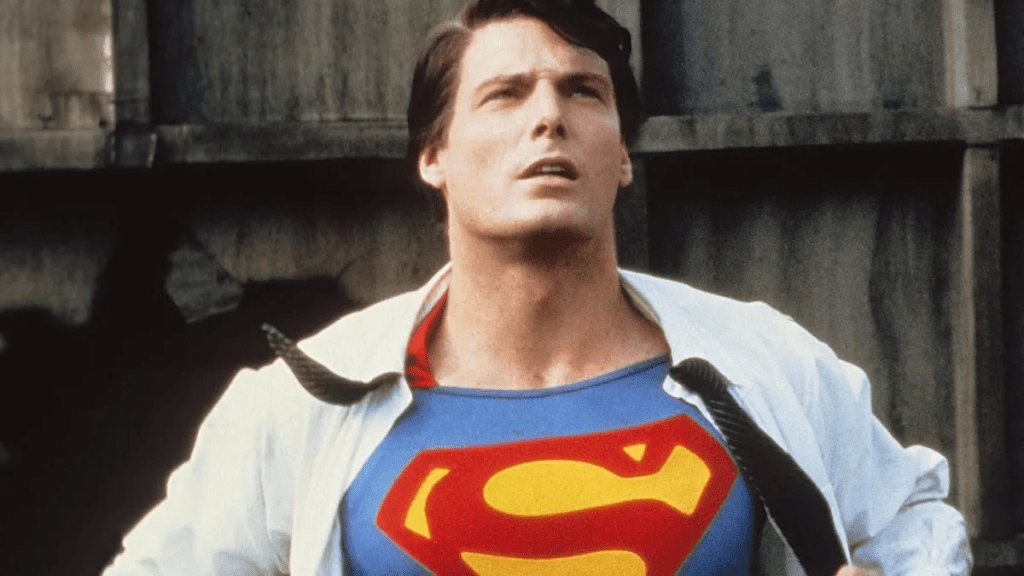
During one of the interviews in the documentary Super/Man: The Christopher Reeve Story that hits hard is when Glenn Close says she thinks Robin Williams would still be alive if Reeve was still alive.
While Williams was suffering from Lewy body dementia at the time of his death, I will have to agree with her that he would’ve had Reeve to talk to and share his condition. Williams might have been able to get the help he needed. While people mostly associate Williams with Billy Crystal, the relationship between Williams and Reeve was different. You don’t always have the same relationship with one of your friends that you do with another. That’s what makes them so genuine.
Close had worked with both Williams on The World According to Garp and with Reeve in the TV movie In the Gloaming, which he directed. Reeve passed away in 2004. The cause of death has been blamed on sepsis he developed from a pressure ulcer or reaction to medication he received causing him to suffer a cardiac arrest. The last nine years of his life he lived as a quadriplegic from injuries he suffered in a horse-riding accident.
But even before the life and career changing injury that happened in 1995, Reeve had proved time and time again he was a fighter. Above Suspicion had been released on HBO a few days before his injury in which he played a police officer who becomes a paraplegic from a shooting. But there’s a twist that I won’t reveal to anyone who hasn’t seen the movie. Co-written by William H. Macy, it is an impressive movie that shows Reeve abilities as an actor. It’s not the best but that ending will make people who winced at the syringe scene in Pulp Fiction really fall out of their seats.
Reeve and Williams were friends and roommates at Julliard. And they both seemed to share a background where they grew up with privileged lives in the 1950s and 1960s but had very difficult relationships with their fathers, who both excelled in upper class business and society. The odds of two men meeting at the Julliard with privileged backgrounds is likely but Reeve and Williams seemed like polar opposites. Reeve had those all-American teenage boy looks while Williams with his shorter stature looked like the kid people like Reeve pick on.
There’s a better story to be told of their friendship and brotherly love. When Williams appeared surprisingly at the 1996 Oscars ceremony, a lot of people stood and cheered but Williams is standing there. Williams didn’t need to clap. But the way he looks at his friend says it all. The way Williams used the power of laughter to brighten his friend’s state of mind has been told time and time again. Maybe one day they’re will be something made more about their friendship through the good times and the bad.
By 1995, Reeve had been struggling for over a decade to have his career rebound. It seemed he got typecast playing Superman. And after the failures of the third and especially the fourth Superman movies, he found himself struggling to shake it all off. In a twist of irony, people Superman was kryptonite to his career. In 1987, he tried to reinvent himself with a pet project Street Smart. However, praise was given to his co-star Morgan Freeman who received his first Oscar nomination.
Thankfully, there’s no mention that I can recall of his 1988 movie Switching Channels in which Reeve acted more as a ringleader in the middle of the fighting of Burt Reynolds and Kathleen Turner. The movie was originally supposed to star Sir Michael Caine, who Reeve had worked with on Deathtrap, but Caine had to fulfill his obligations to Jaws: The Revenge.
Thankfully, the directors, Ian Bonhote and Peter Ettedgui, know what should be left in and what should be left out. This is more of an intimate look at the life of Reeve by interviews with his surviving family members, most notably his sons Matthew and Will. There’s also an interview by the late Brooke Ellison, a disability advocate who passed away about a year ago. Reeve had directed a young Lacey Chabert as Ellison in The Brooke Ellison Story which premiered on A&E a couple weeks after Reeve died.
There’s the normal interviews by celebrities such as Close, Whoopi Goldbeg, Susan Sarandon and Jeff Daniels, who worked with Reeve on the stage. They tell some good stories about working and being with Reeve that leave you feeling he was a really good man and actor who was never really given the acting opportunities to branch out. Daniels recalls how William Hurt had discouraged Reeve from reading for Superman.
As for role as the Man of Steel, his father was reportedly excited at first thinking it was Man and Superman by George Bernard Shaw. However, his father became critical after discovering it was a comic-book movie even though Reeve was going to be working with Marlon Brando and Gene Hackman.
The narcissism of his father seems to be a common motif in male actors. And that is probably why Reeve wasn’t willing to fully commit to marry his partner Gae Exton. But he found his true Wonder Woman in Dana Morosini who he’d married in 1992 and stay with him through it all. Their story, like many couples who suffer life-changing events, show you how great love really is between two people.
When faced with problems, Reeve and his wife did everything they could to prove it wasn’t over. Instead a new chapter in their lives had started. Reeve continued to work appearing in the TV movie remake of Rear Window, where footage is shown. He would also have guest appearances on TV shows such as Sesame Street, The Practice and Smallville, which is a show about Clark Kent’s youth in the Kansas town growing up. It seemed almost a fitting end to his career as an actor as it had come full circle.
In a 1998 interview he said, “Who knows why an accident happens? The key is what do you do afterwards. There is a period of shock, and then grieving, with confusion and loss. After that, you have two choices. One is to stare out the window and gradually disintegrate. And the other is to mobilize and use all your resources, whatever they may be, to do something positive. That is the road I have taken. It comes naturally to me. I am a competitive person and right now I am competing against decay. I don’t want osteoporosis or muscle atrophy or depression to beat me.”
What do you think? Please comment.
 Zane Says