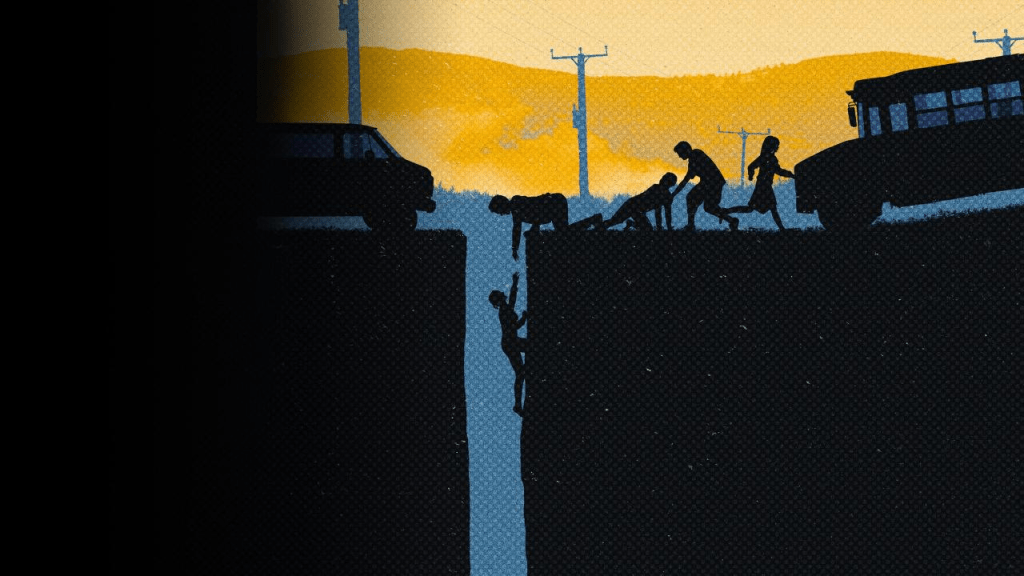
The 1976 kidnapping of several students and a bus driver in Chowcilla, Calif. is one of the strangest true-crime cases ever. On July 15 of that year, three armed men kidnapped 26 students attending a summer school program. The children ranged in ages 5-14 along with a kindly bus driver, Frank Edward Ray, 55 at the time, otherwise known just as Ed.
They were taken to an quarry in Livermore, Calif., and placed in a trailer buried in the ground. The abduction was later discovered to be inspired by the final act of Dirty Harry in which the Scorpio Killer hijacks a school bus with about a dozen kids. It was before the abduction and murder of Adam Walsh in Hollywood, Fla. would lead to a nationwide change in the 1980s on missing children.
But 27 people go missing on a normal summer day, it’s going to arouse suspicion. And the community would be in the nation’s spotlight. It would also cause a major complication in the kidnappers’ plans because they were unable to call in to the local law enforcement with their ransom demands. Remember it was 1976 and the lines were always busy. So, the kidnappers foolishly just went to bed and tried to call at a later time.
Unfortunately, time was a limited factor as the kidnapped’s air supply was running out and the heat was a strain even though the children and Ed had been left food and water. Michael Marshall, who was only 14, was able to climb a makeshift ladder of mattresses to work his way through the hatch to get everyone out. Strangely, Marshall wasn’t even supposed to ride the bus home that day as his mother usually picked him up. However, Marshall says in the HBO Max documentary Chowchilla he had to ride the bus that day as punishment by his parents. A lot of other parents would’ve been glad that Marshall had gotten in trouble earlier that week.
The kidnapping was planned by Frederick Newhall Woods IV, the son of a local wealthy businessman who owned the California Rock & Quarry and had access to it. Woods and two brothers, Richard and James Schoenfeld, were asking for $5 million. By the time they woke up, the news was that the children had been found. So, the initially fled before all were later captured or surrendered to authorities. And from there the problems started as it was revealed the media and authorities wanted to play up more how Ed was the true hero not the younger Marshall kid. Karl Malden played Ed in a TV movie Vanished Without a Trace about the incident that seemed to portray him more as the one who was able to get through the hatch.
And the school, authorities and parents did nothing to help the children. It was a different era where kids were told to “Quit crying or I’ll give you something to cry about.” Or their parents would make them go to their rooms and not come out until they could stop stop crying and behave better. It was the same way they handled the aftermath of abduction and child molestation and rape of Steven Stayner after many years away from his family. Very little counseling was offered to the children and they developed traumas that affected them later in their lives. One of the survivors, Jennifer Brown Hyde, talks about how she had to change schools because of the publicity and now lives in tornado alley where she has still has a phobia of enclosed areas, such as storm shelters.
Even worse was how many authorities acted like none of the kids were seriously injured as there have successful motions to have all the kidnappers paroled. Just think what the sentencing would be if any or all the children or Ed had died. But at the time, they hadn’t determined many of the Vietnam veterans were suffering from post-traumatic stress. Most hid their pain and trauma through alcohol and substance abuse the way their parents and elders did following World War II. I know because I’ve heard a few WWII vets said they turned to the bottle when they returned to America.
The documentary is about the end of innocence and how some children kindergarten age were severely traumatized. I mean this was the same era in which they were blaming young children for being molested and sexually assaulted at churches and schools. Thankfully, the kidnappers didn’t do that. But all the children were traumatized. A trip to DisneyLand was an attempt to make them feel better but parents reported their kids were having nightmares and night terrors.
It’s not discussed in the documentary but one of the child survivors shot his BB at a Japanese motorist who had car trouble near his house months after the kidnapping. Marshall immediately turned to drinking to the point he would blackout in his latter teens. And Larry Park, another survivor who was younger than Marshall, said he also turned to substance abuse. He has since gotten clean and become a born-again Christian. What’s bad is that the survivors of Chowchilla and other traumatic events like Columbine, Sandy Hook, Stoneman Douglass and other school shooting massacres have made changes to help the survivors. But sadly, they’re not safe anywhere.
There once was a time when parents sent their kids to the schools and the only bad things they could think of was an accident on the monkey bars at recess. Maybe the danger was always there but the powers that be decided to overlook it because they didn’t want to deal with the problems. They just wanted quick solutions. And the quick solutions was just to tell young kids who had guns aimed at them and been buried alive to “Get over it!”
What do you think? Please comment.
 Zane Says