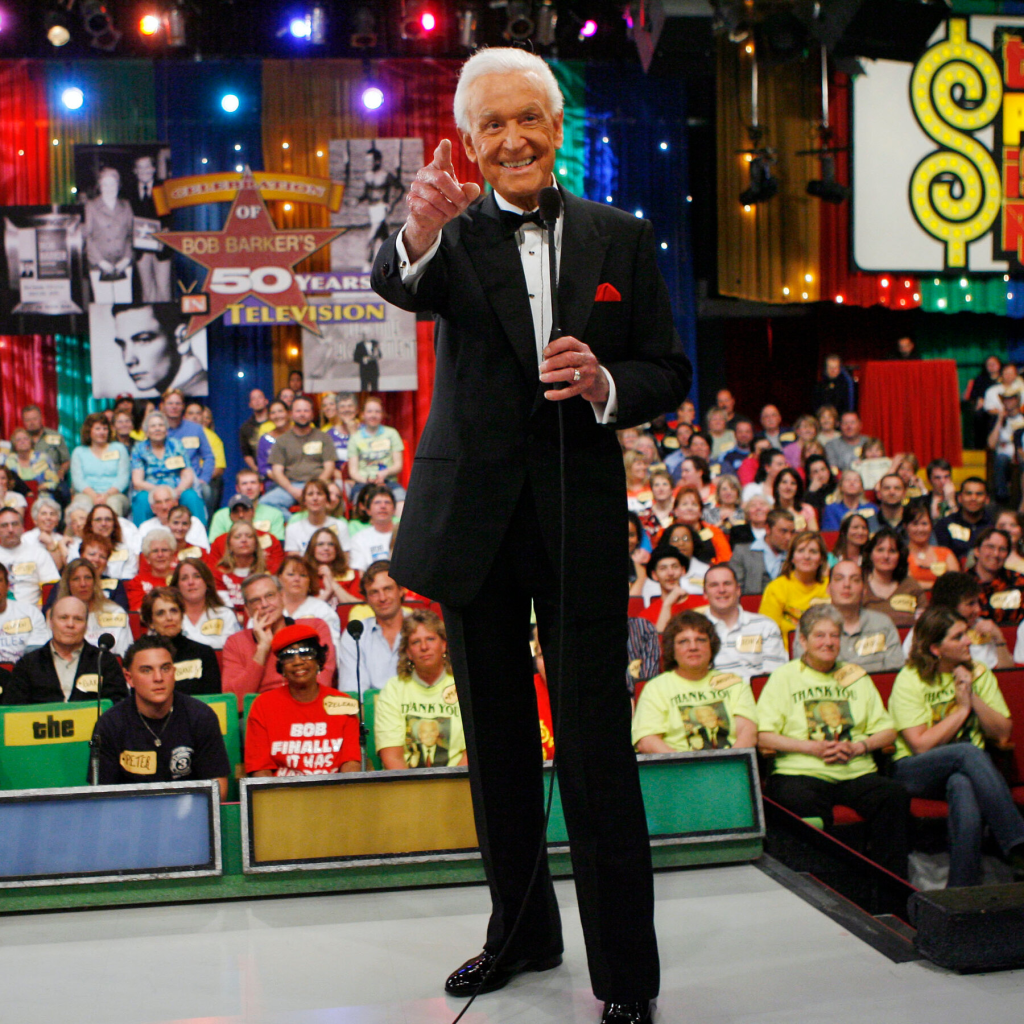
Even though he hadn’t appeared as host on The Price is Right for 16 years, just about anyone who ever watched him can speak it verbatim. “This is Bob Barker, reminding you to help control the pet population. Have your pets spayed or neutered.” It was a odd closing for a game show host to end with at the time, but now, it seems most celebrities will give shout-outs to their causes.
Barker, who died on Saturday, Aug. 26 (International Dog Day, nonetheless) could be considered “woke” before it was a thing. As host of The Price is Right for 35 years, he pretty much could do or say anything (within reason) he wanted. In 1982, a year after the death of his wife (Dorothy Jo Gideon) to lung cancer, he began signing off each episode broadcast with that line. He began to push animal rights activism on the show, bringing out sheltered animals for adoption and refusing to allow fur clothing or products that had been tested on animals.
A vegetarian, he stepped down as master of ceremonies from the Miss USA contest in 1987 when the producers refused to stop awarding fur prizes. As he and Gideon didn’t have children of their own, he had his furbabies, which is no surprise he would become popular with Gen Xers and Millennials over the years. He was very active in other animals rights causing even feuding with fellow activist Betty White over the treatments of elephants at the Los Angeles Zoo. He worked throughout his life for better treatment, even being sued by the American Human Association for libel and slander as he was working with the United Activists for Animal Rights as they publicly attacked the AHA and others in media for their continued mistreatment.
As The Price is Right became famous with a lot of youth as something they would watch during summer breaks and sick days from school, he found a special audience among the other daytime game shows at the time. The show, which was really one big commercial for several products, had a very 1970s cheesy look and feel to it, but it gave contestants their 15 minutes of fame. I worked with a young woman at Dollar Thrifty who would go on to win the big showcase at the end sometime around 2005-2006 if I remember correctly.
But I think what made the show so popular was the comraderie and excitement everyone in the audience felt. Just about everyone wanted to hear Johny Olson or the wonderful Rod Roddy (may he rest in peace) announce their name and scream, “Come on down!” Watching someone’s name being called just made you happy as not only was the constestant excited, but everyone around them jumped up and down with enthusiasm. There was a feeling that everyone was a winner.
While Monty Hall had a decade on Barker with picking people out of the audience on Let’s Make a Deal, there was a feeling excitement through the audience not seen on TV. Most audiences members were often behind the camera with only their canned laughter and applause being heard. Maybe a camera would catch their heads in a darkened theater, but that wasn’t the case here. But on TPIR, it was about showing your excitement. A novice tuning in would assume the entire audience had each chugged a sixer of Jolt Cola before taping began. Even Julia Louis-Dreyfus famously mocked how audience members acted on an episode of Seinfeld.
Barker knew how to interact with the audience and the constestants to give the show the charm it needed to last so long. Even though some of his actions could’ve been seen as a little stuck-up or arrogant, there was mostly a jovial behavior with everyone on set. Even though there are some videos of him getting frustrated with some constestants but after watching them, who can blame him?
The documentary Perfect Bid: The Contestant Who Knew Too Much shows how quick he can be with a quip toward someone but also willing to walk it back when he knows the person was right. That documentary focuses on Theodore Slauson, a huge fan and former contestant, who had discovered for some time, the show was using the same products and could correctly price what items cost to tell constestants.
And really, that was the joy of the show. You didn’t have to be very knowledgable like on Jeopardy! or have a good vocabulary like Wheel of Fortune. All you had to do was listen to people in the audience. Even when in “Contestant’s Row” when someone would bid $1 over the previous constestants, there were no hard feelings. I’m sure contestants knew better than get upset. It was just luck of the draw. And you’d never see people more excited to bid $1.
Unfortunately, it wasn’t all fun and games. The show later became notorious for accusations the Barker’s Beauties weren’t paid a decent salary. And in retrospect, it was kinda sexist to have just women in these positions. Now, there are male “Beauties,” beginning with Rob Wilson and most famously James O’Halloran. But there was the 1994 sexual harrassment lawsuit filed by Dian Patterson as they were rumors circulating they had a sexual fling. Patterson withdrew the lawsuit in 1995 claiming the stress was affecting her health.
That same year, Holly Hallstrom, was fired alleging Barker had said she gained 14 pounds due to a reaction from medication and refusal give false information about the Patterson lawsuit when questioned by media. She sued for wrongful termination but Barker countersued for defamation. The case was finally setlled in 2005 in Hallstrom’s favor.
Despite the behind the scenes controversies (and because it was just a different time), Barker continued to gain popularity especially following a cameo as himself in the 1996 Adam Sandler sports comedy Happy Gilmore. During a memorable scene, Sandler as Gilmore and Barker are paired together during a pro-am tournament where Joe Flaherty plays a heckler hired by Gilmore’s rival Shooter McGavin (Christopher McDonald) to get on Gilmore’s case. When Gilmore can’t perform well and they are dopped dead-last at 50th place, Barker begins heavily criticizing Gilmore.
This caused Gilmore, who has a short fuse and temper, to punch Barker, leading to a knock-down drag-out fight where at one moment, Sandler headbutts Barker and says, “The price is wrong, bitch!” But Barker comes back and wins the fight, calling Sandler a “bitch” before he walks off defiant. Originally, Barker didn’t want to take the role but when he heard he’d win, he was on board. Reportedly, the producers and director Dennis Dugan asked Barker if he’d want a stunt double. Barker simply replied, “I know how to fight.”
Happy Gilmore was a modest success but its popularity among Sandler fans, Gen Xers and Millennials helped make Barker more popular. By the 2000s, most college students and organizations were planning their Spring Break and other vacations around a trip to see The Price is Right rather than Fort Lauderdale. Sandler would make a surprise appearance on one of Barker’s last episodes and the two reunited in 2015 to “reignite” their fighting while trying to tape a segment for Night of a Thousand Laughs. (Another Adam Sandler has been the Price is Right’s director since 2011.)
For their on-screen fight in Happy Gilmore, Sandler and Barker won the word for Best Fight at the MTV Awards. Barker in true fashion wore a suit and tie and Sandler wore his regular street clothes as he always does. Upon hearing of Barker’s death, Sandler said, “Loved talking to him. Loved laughing with him. Loved him kicking the crap out of me.”
Even though he retired in 2007, Barker returned every now again to appear on The Price is Right alongside his successor Drew Carey. But he mosty lived a quiet life the last 16 years as he battled health issues later in his life. He has also hosted Truth of Consequences from 1956 to 1975. Not bad for a young boy who grew up on the Rosebud Indian Reservation in Mission, S.D. Barker’s father was a quarter Sioux which made him an eighth. “I’ve always bragged about being part Indian,” he once said. “Because they are a people to be proud of. And the Sioux were the greatest warriors of them all.”
And Adam Sandler knows that to be true.
While he was later known for his white/grey hair, he had dyed it for years while taping TPIR. Because the show often filmed multiple episodes at a time, he decided to stop dyeing between a break in production. And he enjoyed the compliments he received for the grey hairs. So when production resumed, he wanted to show off his white/grey hair. However, CBS decided to air the episodes before the break and after the break during the same week. Viewers tuning in saw Barker one day with brown hair and the next with white-grey hair.
One viewer wrote to Barker, “You must’ve had one awful night.”
What was your favorite Price is Right game? Plinko? Cliff Hangers? Hole in One (or Two)? Please comment.
 Zane Says